Most people here know me because of bread.
What you may not know is that bread found me long before I understood what it was going to mean in my life.
A Baker's Story
How a bakery underneath my apartment in Germany quietly changed the rest of my life.
By Henry Hunter
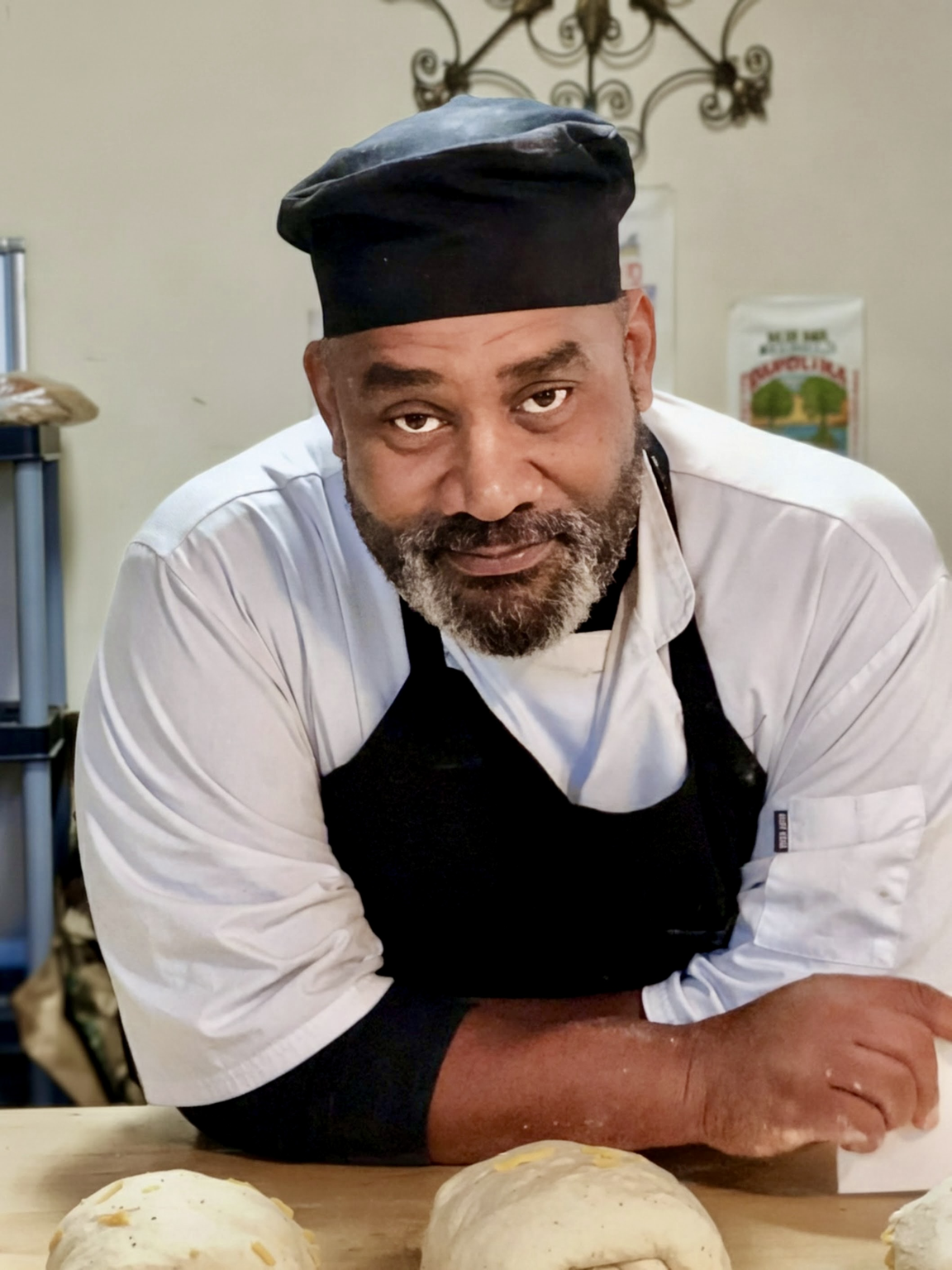
Most people here know me because of bread.
What you may not know is that bread found me long before I understood what it was going to mean in my life.
After high school, my mother sent me about 600 miles away to college in Ohio. I think she figured some distance might help me grow up.
This was back when calling home meant walking down the street to a phone booth. I'd call collect and ask for myself. My mother would answer and say, “I'm sorry, he's not here,” then hang up.
That was our system.
She knew I was okay. I knew she was okay. And neither one of us had to pay for a long-distance call.
After college, I joined the Army.
I eventually found myself in Germany working in satellite communications during the deployment of the Pershing II missile system. We worked rotations at a nuclear alert site, six weeks on and six weeks off.
Because of my security clearance, I was allowed to live off post. My apartment happened to sit above a bakery.
And downstairs was a baker named Herr Sherman.
He was an older Jewish baker, spoke broken English, and decided almost immediately that I was going to be useful to him. He'd tell me the reason my rent was so cheap was because I worked downstairs.
So I carried flour. Swept floors. Wiped counters. Moved things that needed moving.
Bread meant absolutely nothing to me.
I may as well have been stocking shelves at Home Depot.
But Herr Sherman kept teaching anyway.
At the time, I didn't realize that was what he was doing. Looking back, he was my Mr. Miyagi.
Wax on. Wax off.
There was one bread he made once a week that fascinated me.
People would line up outside the bakery waiting for it.
Challah.
I watched him work the dough, divide it, roll the strands and make these beautiful braids. Then, before the bread went into the oven, he would tear off a small piece of dough, wrap it in foil, toss it into the back of the oven and quietly say something in Hebrew.
One evening I finally asked him what made that bread so special.
He looked at me over his glasses.
Paused.
Then said:
“Henry, go wash your hands.”
I can still hear him saying it.
I washed them.
And from that day forward, he began teaching me differently.
He taught me to feel dough instead of simply following a clock.
He showed me how dough tells you when it's ready, when it needs more time, when you've pushed it too far.
He taught me the prayer he had been saying and explained the tradition behind the portion of dough he placed in the oven.
Suddenly bread wasn't flour and water anymore.
It carried people with it.
History. Faith. Family. Culture. Memory.
Eventually I left the Army, came home and built a career in advertising and marketing with CBS and Fox television.
Life got busy.
Marriage. Kids. Work.
Bread disappeared for a long time.
Then I retired.
And I started baking again.
A little at first.
Then a lot.
There was bread everywhere.
My kids finally said, “Dad, you need to sell this stuff.”
So I went to the farmers market.
We did well. Really well.
But I don't think it was only because the bread tasted good.
I talked to people.
I told them where these breads came from. Why they were made the way they were. What made this loaf different from the one sitting on a grocery store shelf.
I'd hand them a loaf and tell them to smell it. Feel the crust. Hold it.
That was partly the old advertising guy in me.
Once the bread was in their hands, it was already about 90 percent theirs.
Eventually I decided to open a real bakery.
Insurance purchased. Plans made. I was one day away from signing a lease.
Then South Carolina shut down because of COVID.
Everything stopped.
My customers began calling and asking how they were supposed to get their bread.
I couldn't sell it to them.
So after sitting around for a couple of weeks, I had an idea.
Maybe I could teach them to make it themselves.
I started a Facebook group because I needed somewhere to do a Facebook Live once a week.
On Saturdays I'd have one loaf ready for the oven, another finishing fermentation, another ready to shape, and then I'd start mixing the next one while explaining what I was doing.
I remember Payton and me celebrating when 13 people showed up to watch.
Thirteen.
That may not sound like much until you imagine 13 people sitting in your living room staring at you while you try to make bread.
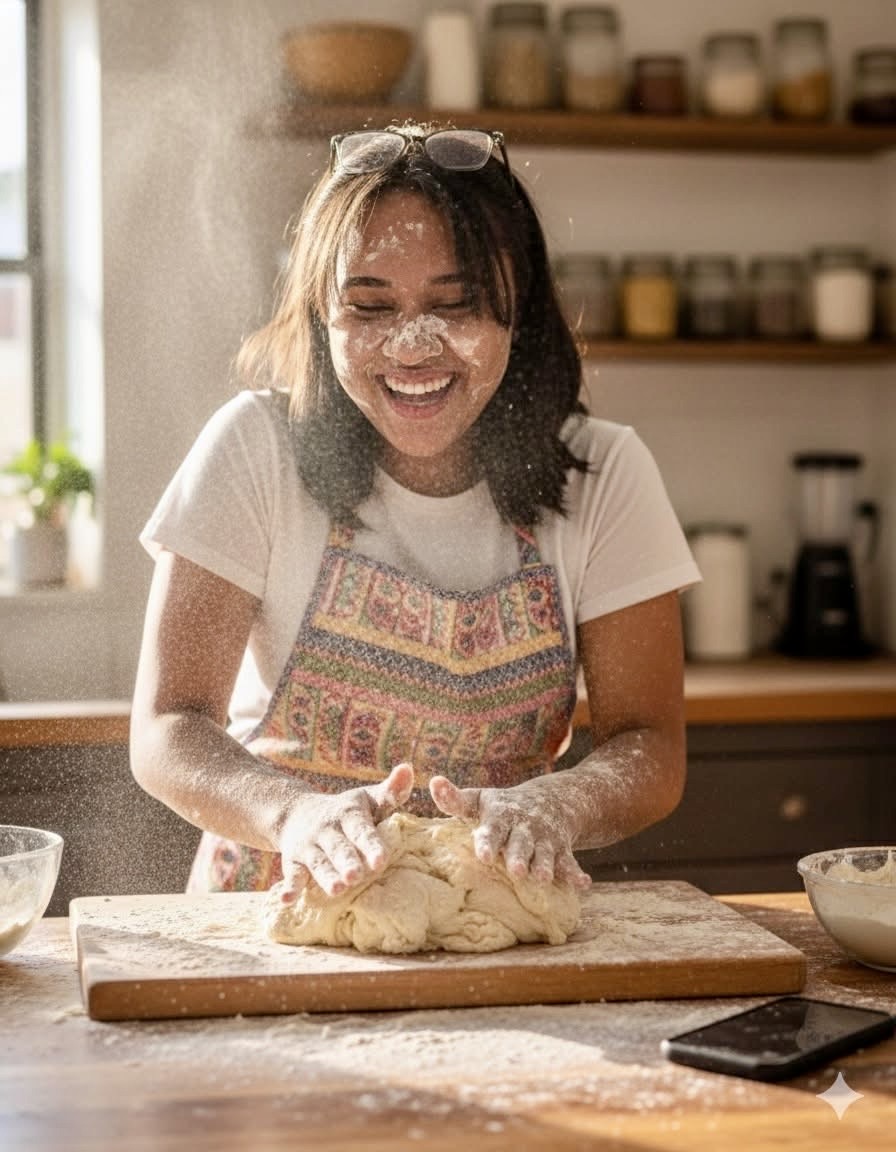
That little Facebook group became Baking Great Bread at Home.
Tens of thousands of bakers eventually came through the door.
And for years I poured everything I knew into it.
But Facebook was never built to be a classroom.
Something posted in the morning disappears by afternoon. Great answers get buried. The same questions get asked again because nobody can find yesterday's answer.
Meanwhile, I kept watching people struggle with tiny mistakes that ruined otherwise good bread.
And too often the response from bread culture was another beautiful loaf on Instagram.
Look what I made.
Perfect ear. Perfect crumb. Perfect photograph.
Beautiful, but not particularly helpful to the person standing in their kitchen wondering why their dough just turned into soup.
I wanted something different.
A place where people could actually learn.
Where asking a basic question wasn't embarrassing.
Where somebody could post an ugly loaf and we'd help them figure out why it happened instead of simply scrolling past it.
That eventually became Crust & Crumb Academy.
I'm 65 now.
I'm not interested in pretending I'm a social media influencer, hiring a production crew or spending my days creating perfect little pictures of bread.
I am interested in teaching.
And now I have tools that let me communicate things I've carried around in my head for decades in ways I couldn't have created sitting at my kitchen table with a box of crayons.
I use AI for some of that.
Not to pretend something happened that didn't.
Not to replace what I know.
To help me teach it better.
I always say we ought to use these new superpowers for good.
That's what I'm trying to do.
Take the little bit I've learned in more than four decades around bread and hand it to the next person.
Which brings me back to Herr Sherman.
He probably had no idea what he was starting when he looked over those glasses and told a young soldier:
“Henry, go wash your hands.”
But I hear those words in almost everything I do here.
Because before he taught me how to make bread, he taught me that bread deserved my attention.
And somewhere along the way, I learned something else.
The bread matters.
But the people around the table matter more.
That's what I hope we're building here.